Self & Relationships
Childhood patterns can appear in the way we understand ourselves, choose relationships, handle conflict, set boundaries or respond to other people’s needs.

The way we learnt to handle conflict. What happened when we made mistakes. Whether love felt safe or conditional. The roles we learnt to play in our families.
We can grow up, build lives of our own and still find some of those patterns appearing in the way we parent, relate, lead and respond when something touches an old nerve.
The MindFull Parent is about understanding what we carry, so we can become more intentional about what we carry forward.

Perhaps you promised yourself you would never speak to your children the way your parents spoke to you.
Then one day, you’re tired, overwhelmed or angry, and you hear something come out of your mouth that sounds painfully familiar. It hits a deep nerve.
Or perhaps it doesn’t involve parenting at all.
Maybe you struggle to say no without feeling guilty. You take responsibility for everyone around you. Criticism makes you feel disproportionately small. Conflict feels dangerous; you’d rather people-please or start walking on eggshells. You understand intellectually that you’re allowed to have boundaries, yet something in you still feels as though setting one makes you a bad person.
Reparenting gives us a way to become curious about those reactions.
Not every difficulty we experience as adults comes from childhood. But some of the ways we learnt to survive, connect and belong when we were younger can continue long after the circumstances that created them have changed.
Childhood patterns can appear in the way we understand ourselves, choose relationships, handle conflict, set boundaries or respond to other people’s needs.
Children have an extraordinary ability to find parts of us we thought we’d already dealt with and left behind.
Parenting can bring our own childhood experiences back into the room, sometimes when we least expect them.
Patterns around authority, approval, conflict, responsibility and belonging don’t necessarily disappear when we walk into an office.
Sometimes the workplace becomes another place where they play out.
We might become triggered by behaviours that were never permitted when we were young.
We might struggle to tolerate emotions our own parents couldn’t tolerate in us.
We might overcorrect and overcompensate so strongly against our childhood that we accidentally create a different problem.
And sometimes we simply don’t know what to do because the parenting we experienced isn’t the parenting we want to reproduce, and we didn’t have a regulated presence to model ourselves on.
Reparenting doesn’t give us a script for becoming perfect parents.
But it can help us understand what belongs to the child standing in front of us and what might belong to our inner child and the child we once were.
The patterns we learnt in families can follow us into relationships, leadership and work.
They can influence how we respond to authority, conflict and criticism. They may affect how easily we set boundaries, whether we feel responsible for everyone around us, or how safe it feels to disagree.
And in family businesses, those dynamics can become even harder to separate.
A founder and successor may also be parent and child. Colleagues may also be siblings. Conversations about leadership, ownership, responsibility and succession can carry decades of family history into the room.
The MindFull Parent explores these patterns not to reduce every workplace difficulty to childhood, but to understand when the past may still be participating in the present.
I’m a reparenting coach, speaker and facilitator, and the founder of The MindFull Parent.
I came to this work partly through study and training, but also through trying to understand my own history.
There were patterns I could explain perfectly well intellectually, yet I still found myself repeating them emotionally. There were moments in parenting, marriage and leadership when I reacted in ways I didn’t understand. And there were things I had once considered completely normal that looked very different when I began examining them as an adult.
The more I explored reparenting, the less interested I became in deciding who was to blame. I became much more interested in what happens next.
What do we do once we recognise the pattern?


Individual conversations exploring childhood patterns, present-day triggers, boundaries, relationships and parenting.

Interactive workshops and programmes for parents, schools, communities and organisations.

Talks, panels and facilitated conversations around reparenting, parenting, intergenerational patterns and the ways these dynamics appear in our lives and workplaces.
This work doesn’t always fit neatly into five steps.
I write about the messier parts too: parenting moments I don’t immediately understand, things from childhood that surface years later, relationships, family systems, cycle-breaking, and the uncomfortable space between understanding why something happened and recognising that it still wasn’t okay.
Protecting family at all costs can mean protecting people from the consequences of their own behaviour.
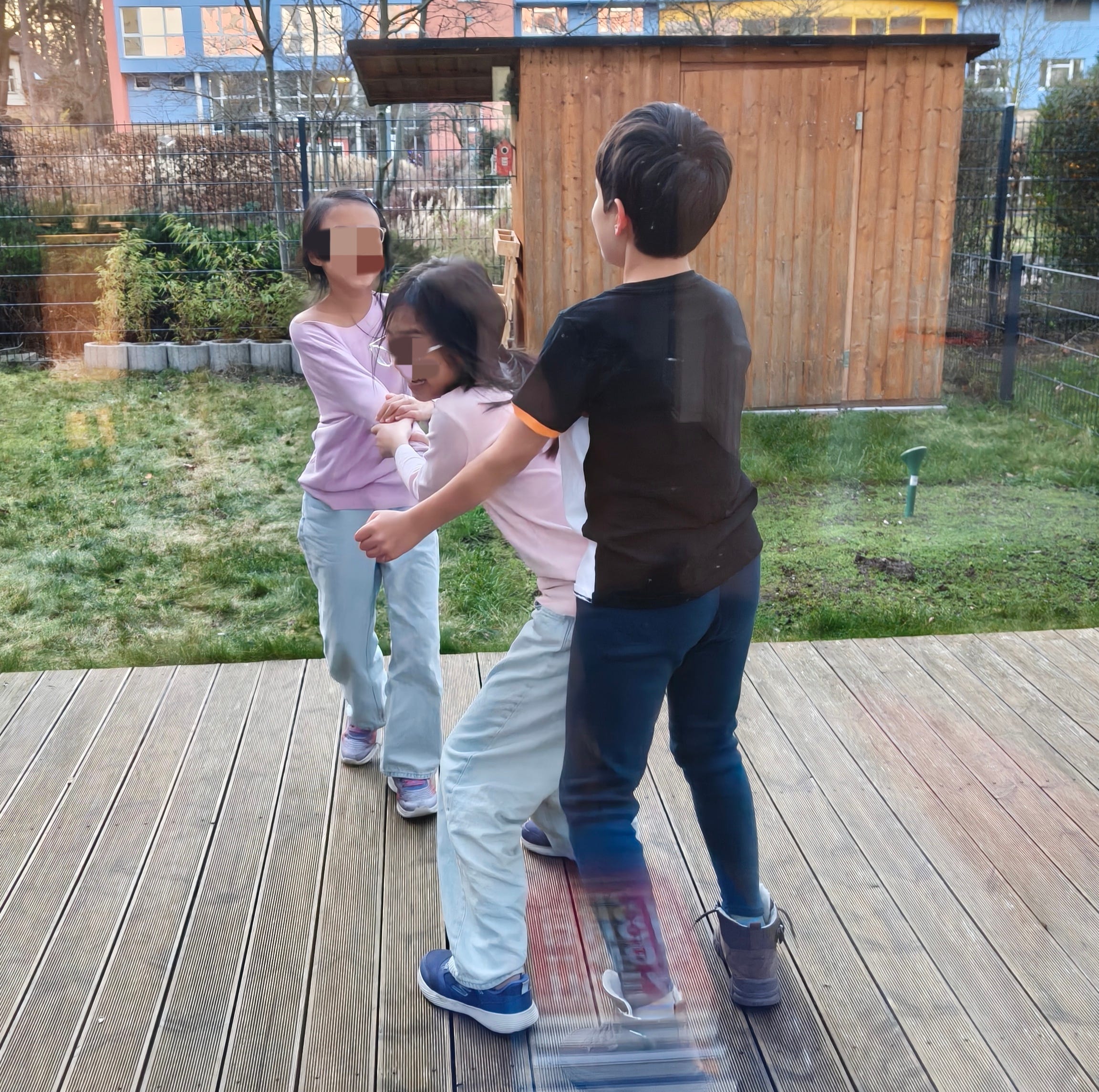
What happens when children move between family systems with different rules, emotional climates and ways of relating?

“Thank you Michelle for sharing and facilitation yesterday. You are one of the most amazing speakers and genuine members who I’ve met.
“It is tough to put your story out there and it makes a person so vulnerable. The group was facilitated with grace, class and sympathy.”
A reaction you keep having.
A parenting moment you can’t quite explain.
A family pattern you’re beginning to recognise.
Or something from the past that seems to keep finding its way into the present.
We can start there.